Many Happy Returns
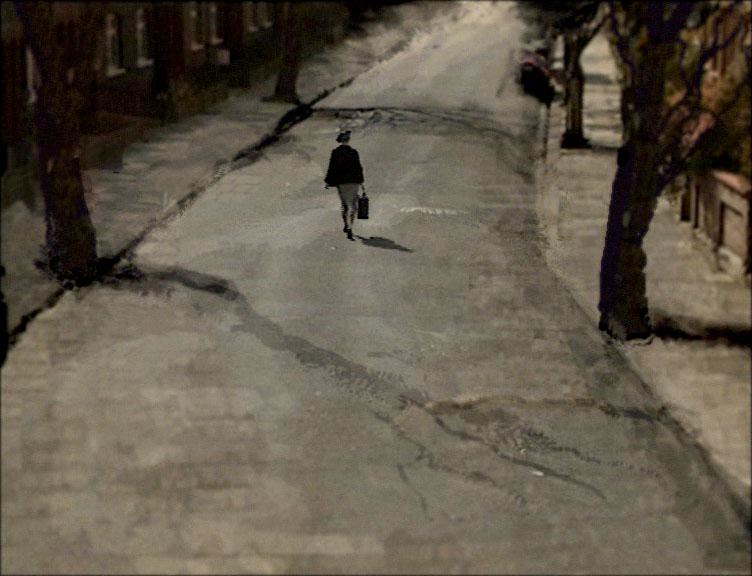
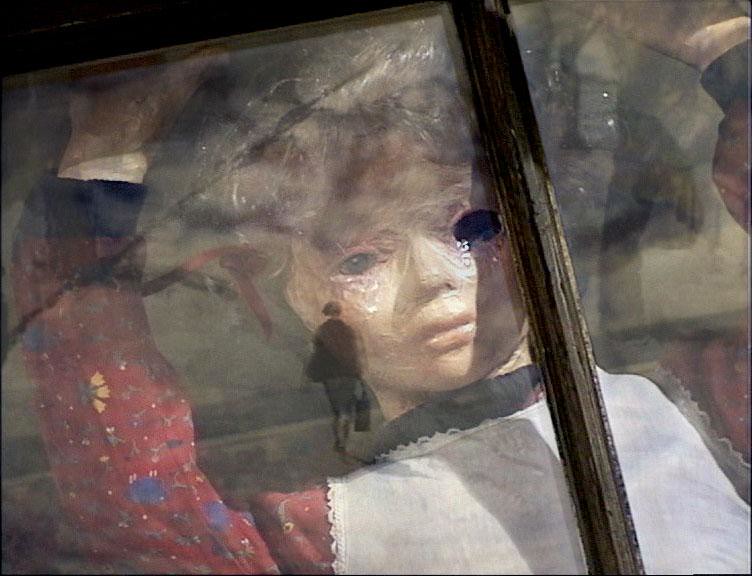
The disjointed debris of our childhood state still lurking within our adult consciousness act as a painful, disruptive force. A ghost-like little girl keeps tapping on a woman's consciousness, demanding attention, recalling a traumatic childhood event and thus distorting her experience of the present.
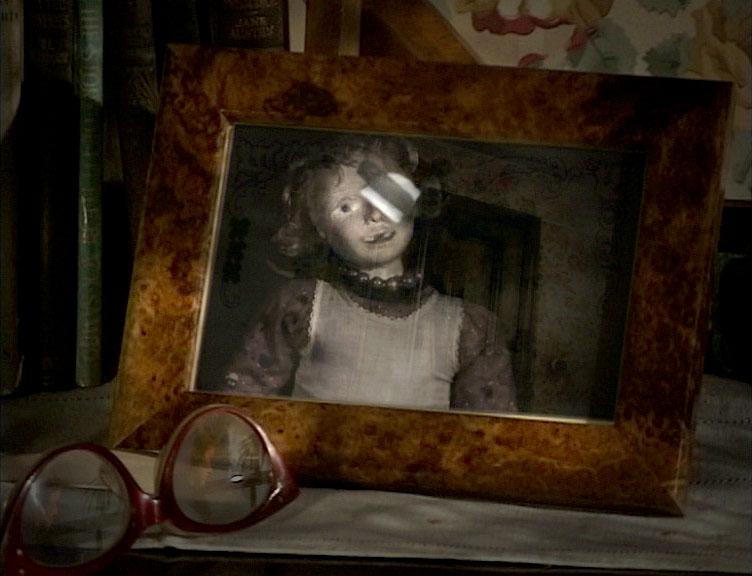
Papier-mâché puppets, drawn animation, computer animation, and lightly altered live action share the frame. A door slams or a mirror catches a glance, and the present collapses into the past.
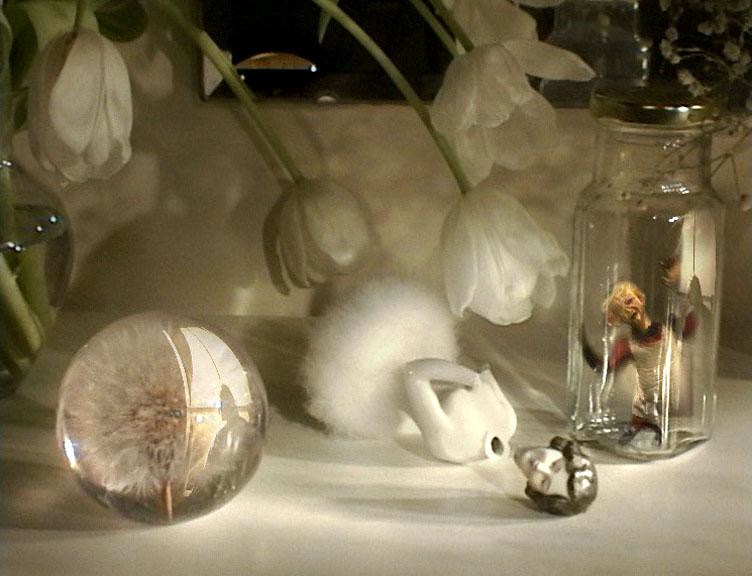
Marjut had strabismus as a child, and remembers her mother's distracted, sad way of looking through her. The ghost-like child of the film is a version of that earlier self.
Many Happy Returns is very much how I visualise the world in my head.
Marjut Rimminen, Marjut's Biography, a film by Jason Elliot, 2024
A compelling work which succeeds in subverting conventional definitions of story-telling, animation and cinema.
Tampere International Short Film Festival jury, 5 March 1997
The animation resurrects the repressed and transparent child and forces the spectators to truly see her, not only with the help of their eyes.
Slava Greenberg, Frames Cinema Journal, 2014
It is like a kick in the kidneys.
Thomas Basgier, Animation World Network Magazine, 2 July 1997
It was terribly upsetting because you don't get that contact with people. My mother had this very depressed and sad way of looking through you.
Marjut Rimminen, on her childhood strabismus, in conversation about the making of the film
Computers came into my life, and all of a sudden I realised this is the way I can see the world.
Marjut Rimminen, Marjut's Biography, a film by Jason Elliot, 2024
When my editor Tony Fish died, my big cry of sorrow was to say to him thank you, thank you, thank you. As an animator you spend so much time with your material that you become deaf and blind to what is there. He was able to give what he called the second direction. He cut two minutes out of Many Happy Returns. He just said, darling, it does not work. And because he is such a wonderful friend and collaborator, you accept it. The film was much better without those two minutes. But can you imagine? Two minutes is months of work, chucked out.
Marjut Rimminen, Marjut's Biography, a film by Jason Elliot, 2024
Tony Fish (1943–2023) cut The Stain, Many Happy Returns, the Unicef film and Learned by Heart. He also edited Bob Godfrey's Great and Suzie Templeton's Peter and the Wolf, both of which won the Academy Award for best animated short.
- 🏆 Grand Prix, 1997 Tampere International Short Film Festival
- 🥈 Second Prize, Best Computer Assisted Animation, 1997 Los Angeles World Animation Celebration
- 🥈 Jury Special Prize, 1997 Krakow International Short Film Festival
- 🥇 The Grand Animation Prize, 1997 Vila do Conde Short Film Festival
- 🥇 First Prize, 1997 Fantoche International Animation Festival
- 🥉 Honorary Distinction for Best Animation, 1997 Drama International Short Film Festival
- Finalist, 1998 British Animation Awards
- 🥇 Directors' Choice Award for Most Innovative Animation Work, 1998 Images Festival, Toronto
- Diploma, 1997 KROK International Festival of Animated Films, films of 5 to 10 minutes
- Cartoon d'Or nominee, 1998 Anima, Brussels, one of four nominees
Credits
- Words
- Harriett Gilbert
- Father and Young Man
- Kevin O'Donohoe
- Mother and Young Woman
- Sarah Strickett
- Voices
- Anthony May, Melanie Hudson, Camilla Hunsley
- Live-action design and production
- Daniel Simpson, Adam Cutts, Mark Sewell
- Lighting
- Layne Comarasawmy
- Editing and sound
- Tony Fish
- Sound and dubbing
- Nigel Heath
- Digital compositing
- Timo Arnall
- Director and animator
- Marjut Rimminen
- Producer
- Lee Stork
- Production
- A Tricky Films production for Channel 4
- Distribution
- Channel Four International